Professional, Affordable & Considerate Sydney Plumbers
(02) 9072 0760
We're Open!
Professional, Affordable & Considerate Sydney Plumbers
(02) 9072 0760

By
SPS Plumbers
| Hot Water Systems | Sydney, NSW
A hot water tempering valve controls the temperature of water delivered to
your taps and showers by blending hot and cold water. If your hot water is
running too hot or too cool, adjusting the tempering valve is often the
fix. This guide walks you through what a tempering valve does, the correct
legal temperature settings in NSW, how to safely adjust it yourself, and
when to call a licensed plumber.
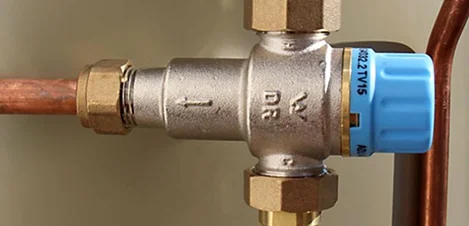
A hot water tempering valve, sometimes called a thermostatic mixing
valve (TMV) or blending valve, is a small but important device fitted to
your
hot water system
. Its job is to mix hot water from your storage tank or continuous flow
unit with cold water from the mains, delivering a safe, consistent
temperature to your taps, showers, and bathroom fixtures.
Most hot water storage tanks are set to heat water to around 60°C to
kill bacteria like Legionella. That temperature is dangerously hot at
the tap. The tempering valve brings it down to a safe level, typically
50°C, before it reaches you.
You will usually find the tempering valve connected directly to your hot
water system, near the base of a storage tank or on the outlet pipework
of a continuous flow unit. It looks like a small cylindrical fitting
with three connections: one for hot water in, one for cold water in, and
one mixed outlet going to your fixtures.
Getting the temperature right is not just about comfort. It is a genuine
safety issue, especially in homes with young children, elderly
residents, or anyone with reduced sensitivity to heat.
Water at high temperatures causes scalding burns quickly. The table
below shows just how fast damage can occur at different temperatures:
|
Water Temperature |
Time to Cause a Serious Burn |
Risk Level |
|---|---|---|
|
70°C |
Less than 1 second |
Extreme |
|
60°C |
Approx. 5 seconds |
Very High |
|
55°C |
Approx. 30 seconds |
High |
|
50°C |
Approx. 5 minutes |
Moderate |
|
45°C and below |
Unlikely at normal use |
Safe for most |
On the flip side, water that is too cool creates a different problem. If
the temperature coming out of your hot water system drops below 50°C at
the source (before the tempering valve), bacteria can multiply inside
the tank. A correctly calibrated tempering valve keeps both risks in
check.
In New South Wales, the Plumbing Code of Australia and AS/NZS 3500 set
clear rules on hot water delivery temperatures:
Important:
In NSW, tempering valves are a legal requirement for all new hot water
installations in residential dwellings and certain commercial
premises. If your valve is missing, faulty, or has never been
installed, you are not compliant. A licensed plumber can assess and
rectify this.
Adjusting a tempering valve is a straightforward task, but having the
right equipment on hand before you start will save you time and
frustration.
Safety first:
Do not attempt to adjust a tempering valve while the hot water system
is actively heating. Let the system settle for a few minutes after use
before making any changes.
The exact adjustment method varies slightly between brands such as
Reliance, Caleffi, Watts, and Honeywell. However, the process is broadly
the same across most residential tempering valves. Follow these steps
carefully.
Find the valve at or near your hot water unit. It is typically
installed on the outlet pipe and has a blue/red adjustment cap or
spindle on top. If you are unsure, follow the hot water outlet
pipe from your tank.
Turn on a hot tap (a bathroom basin is ideal) and let the water
run for 30 to 60 seconds until the temperature stabilises. Use
your thermometer to measure the current temperature. Record this
reading so you know where you are starting from.
While not always essential for a minor adjustment, it is the
safest practice to isolate the hot water supply before touching
the valve. Turn off the power or gas to your hot water unit and
close the cold water inlet valve to the system.
Most tempering valves have a small plastic cap covering the
adjustment spindle. Gently pry or unscrew this cap to expose the
adjustment mechanism underneath. Keep the cap somewhere safe — you
will need it afterwards.
If the temperature is still off, repeat the adjustment process in
small increments. Allow the temperature to stabilise between each
test. Patience here will give you a more accurate result than
making large adjustments.
Once you have reached the correct temperature, refit the
protective cap securely. Note down the final temperature reading
and the date so you have a record for future reference.
Tip:
Test at multiple outlets (shower, hand basin) after adjusting, as
temperatures can vary slightly depending on pipe lengths and
insulation in your home.
If you have turned the spindle clockwise and the temperature has not
dropped, the valve may be faulty or blocked with mineral deposits.
Flushing the valve can sometimes clear a partial blockage. If the
problem persists, the valve likely needs replacing.
Inconsistent temperature is one of the most common signs of a failing
tempering valve. If your water swings between hot and cold, or has
become noticeably cooler than it used to be, the internal cartridge may
be worn or the valve may have exceeded its service life.
Mineral scale and corrosion can seize the spindle over time, especially
in areas with hard water. Do not force it. Forcing a seized spindle can
crack the valve body. Call a plumber to inspect and replace it safely.
If the temperature is correct in the morning but drops or rises by the
afternoon, this often points to a failing thermostatic element inside
the valve. The element is responsible for continuously balancing hot and
cold water flow — once it wears out, it can no longer do this reliably.
Tempering valves are not designed to last indefinitely. In Australia,
most manufacturers and plumbing standards recommend replacement every
5 years . After this point, the
internal components degrade and the valve can no longer reliably control
temperature, which creates both a scalding risk and a compliance issue.
Replace your tempering valve if you notice any of the following:
A replacement tempering valve is a relatively low-cost job for a
licensed plumber and is almost always more cost-effective than repeated
call-outs to try and nurse an old valve back to life.
While adjusting a tempering valve is something a confident homeowner can
do, there are situations where you should stop and pick up the phone
instead.
Remember:
In NSW, all work on hot water systems, including valve replacement,
must be carried out by a licensed plumber. DIY plumbing work is
illegal and may affect your home insurance.
The SPS team services all areas across Sydney and can inspect, adjust,
or replace your tempering valve the same day. With upfront pricing and
no hidden fees, you will always know the cost before any work begins.
SPS Plumbers are available 7 days a week across Sydney. Same-day service,
upfront pricing, no hidden costs.
SPS Plumbers Sydney is a Multi-Award Winning Plumbing Company Delivering the Highest Standards of Service


Accredited
Professionals


Copyright 2026 | SPS Plumbers - Sydney's Plumbing Specialists | All Rights Reserved | SPS Plumbers License No. 394055C